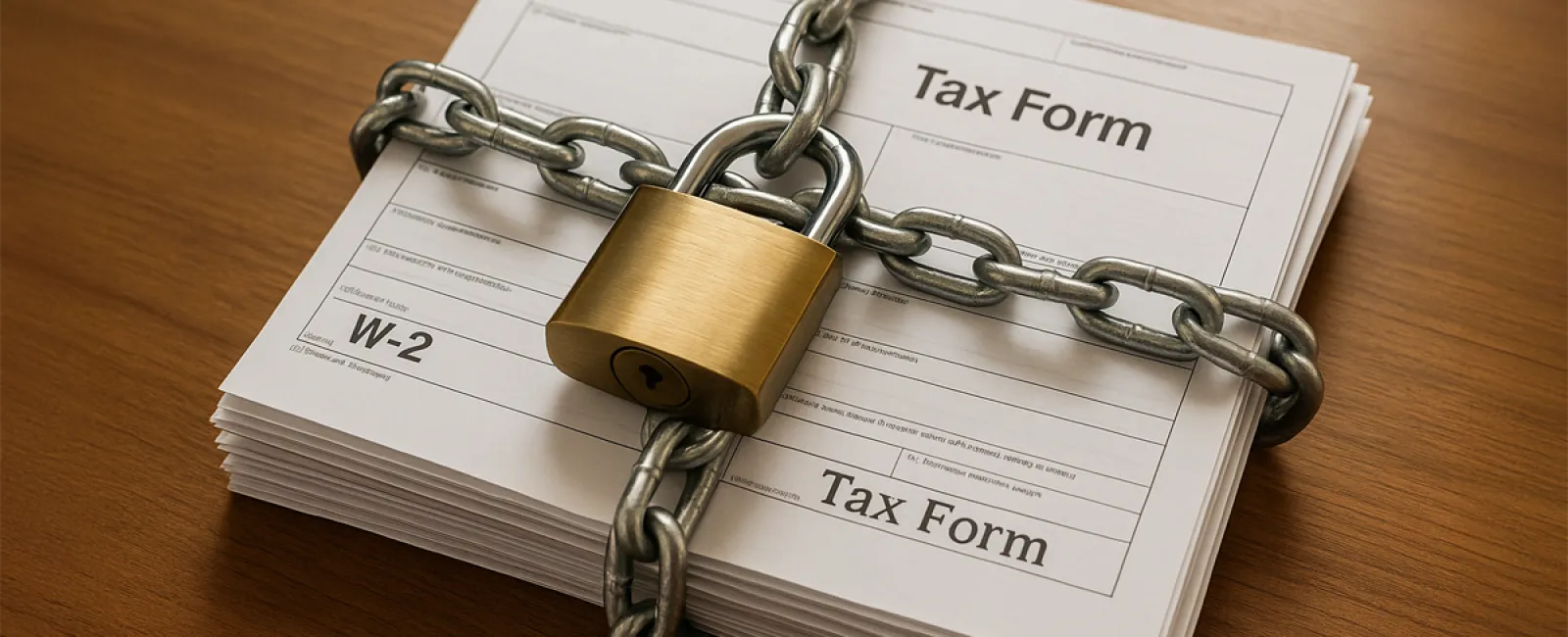
February is when tax season quietly ramps up. Your accountant's calendar fills quickly. Your bookkeeper starts pulling reports. W-2s, 1099s, and deadlines move from "upcoming" to "urgent."
It's also when one of the most effective small-business scams of the year starts circulating — often before anyone realizes it's tax season yet.
For many Massachusetts businesses, the first sign isn't a system alert or a security warning. It's an ordinary-looking email sitting in someone's inbox.
Unmasking the W-2 Scam: What You Need to Know
The setup is simple — and that's why it works.
An employee in payroll or HR receives an email that appears to come from the business owner, CEO, or another senior executive. The message is short and believable:
"I need copies of all employee W-2s for an upcoming accountant meeting. Please send them ASAP — today is slammed."
Nothing about the request feels unusual. It's February. Tax prep is underway. The sender looks legitimate. The urgency makes sense.
So the employee sends the files.
Only afterward does anyone realize the email wasn't actually from leadership. The sender address was spoofed or subtly altered, and the data is now in the hands of a criminal.
At that point, the damage is done.
The attacker now has:
-
Full legal names
-
Social Security numbers
-
Home addresses
-
Salary information
Everything needed to commit identity theft or file fraudulent tax returns before your employees do.
Aftermath: The Impact on Your Employees and Business
Most victims don't find out right away.
The first sign usually comes weeks later, when an employee files their taxes and receives a rejection notice:
"A return has already been filed using this Social Security number."
Now your employee is dealing with the IRS, credit bureaus, identity protection services, and months of cleanup — all because of one email that looked routine at the time.
From the business side, the situation quickly becomes more complex. There's the internal trust issue, HR fallout, possible legal exposure, and reputational damage to manage. Multiply that across your entire payroll, and the impact escalates fast.
Why This Scam Deceives So Many
This isn't a sloppy phishing attempt full of spelling errors. It's carefully timed and well researched.
It works because:
-
The timing is perfect. W-2 requests are normal in February for Massachusetts businesses.
-
The request is reasonable. No unusual transfers or wire instructions.
-
The urgency feels real. Tax season is genuinely busy and stressful.
-
The sender looks legitimate. Criminals often know executive names and vendors.
-
Employees want to help. People respond quickly when they think leadership needs something, especially if they're expecting a tax return.
In short, it exploits trust and routine — not carelessness.
Steps to Shield Your Business from This Threat
The good news is that this scam is very preventable. It doesn't require expensive tools, but it does require clear rules and reinforcement.
A few practical steps make a major difference:
-
Establish a strict "no W-2s via email" policy. No exceptions. Sensitive payroll data should never be sent as email attachments, regardless of who appears to be asking.
-
Verify critical requests through a second channel. A quick phone call or in-person check using known contact information stops this scam immediately.
-
Brief payroll and HR staff now. A short awareness conversation before deadlines pile up is far more effective than cleanup later.
-
Secure payroll systems with multi-factor authentication. MFA adds a critical layer of protection if credentials are ever compromised.
-
Reward verification, not speed. Employees should feel supported when they pause to double-check sensitive requests.
These steps are simple, practical, and effective — especially when implemented before tax pressure peaks.
Book a Discovery Call to Get Serious About Cybersecurity
Anticipate New Threats This Tax Season
Unfortunately, this isn't the only tax-season threat Greater-Boston businesses face.
We typically see an increase in:
- Fake IRS notices demanding urgent payment
Phishing emails posing as tax software updates
-
Spoofed messages from "your accountant"
-
Fake invoices timed to look like legitimate tax expenses
Tax season creates urgency, distraction, and predictable workflows — exactly what scammers rely on.
Businesses that get through this period without incident usually aren't lucky. They're prepared.
Are You Ready to Protect Your Massachusetts Business?
If your team knows what to look for, understands verification procedures, and has the right access controls in place, you're already ahead of many small businesses.
If not, February is the right time to address it — not after the first incident.
A short Tax Season Security Check can help review:
-
Payroll and HR system access controls
-
Multi-factor authentication coverage
-
W-2 request verification procedures
-
Email safeguards that catch spoofed messages
Even if this doesn't fit your situation, your fellow business owners might benefit. Forward this article—it could prevent a costly crisis.
Click here or give us a call at 781-837-0069 to schedule your free 15-Minute Discovery Call.
Because tax season is stressful enough without falling victim to identity theft.