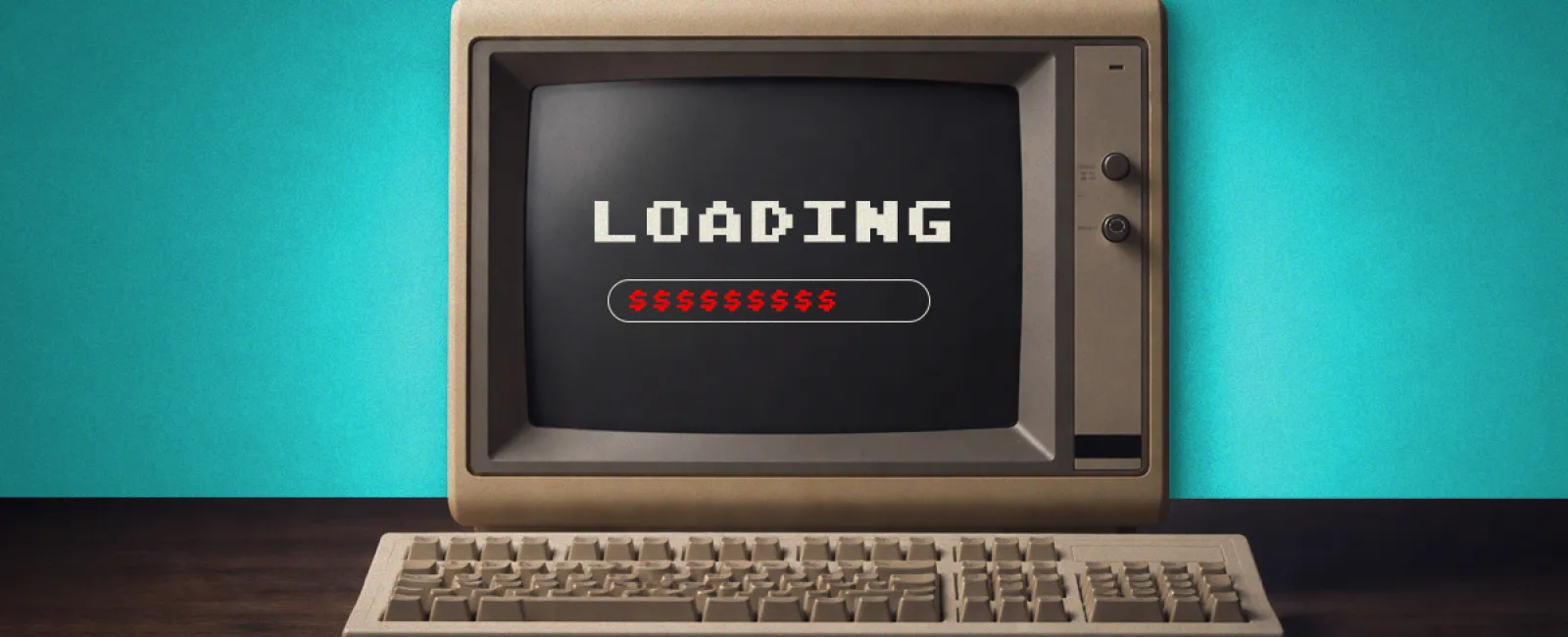
Technology can be a lot like underpants - sometimes you hold onto it long after you should have thrown it away. Sure the elastic waist has seen better days and there are a few holes, but it still technically covers the tasks set before it, so why be wasteful?
Massachusetts businesses see the warning signs in everyday moments: an email that takes forever to send, a screen that freezes right when you hit save, or a system that slows to a crawl for no clear reason.
It may feel minor, but those recurring headaches keep following you around and quietly drain time, money, and productivity.
What looks like a small inconvenience today can become a steady monthly expense before you realize it.
The Most Expensive Thing in Your Office Might Be the Computer That Still Turns On
There's a specific kind of denial that takes root around old technology. The machine boots—eventually. The software opens—mostly. The spreadsheet saves—usually. And because it still does the thing it was bought to do, it earns another quarter on the desk. Then another year. Then a place in the budget meeting where someone says, "It still works," and everyone moves on to the next line item.
We see this constantly in offices around metro Boston. A receptionist's workstation that takes longer to wake up than you do before you've stopped at Dunkin'. A controller's laptop that fans like a small aircraft every time payroll runs. A server humming away in a closet that, if you opened the lid, would reveal a manufacture date older than some of the people working in the building. None of it is broken. All of it is costing money.
That's the part nobody puts on an invoice.
The slow tax
Outdated technology rarely fails the way people expect it to. There's no dramatic moment, no smoke, no error message that finally forces a decision. Instead, it leaks. A minute here. Three minutes there. A reboot before the morning meeting. A file that has to be re-saved because the first attempt timed out. The whole thing runs in the background like a slow drip from a pipe nobody's bothered to look at.
The numbers, when you sit down with them, are uncomfortable. Microsoft has put the annual productivity loss from outdated equipment at roughly 42 hours per employee per year. IDC has reported that companies lose as much as 20 to 30 percent of annual revenue to inefficiencies tied to aging systems. These are not the kind of figures that show up in a single moment. They show up in the gap between what your team could be producing and what they actually deliver, week after week, while a five-year-old workstation does its slow morning stretch.
Call it the slow tax. Everyone pays it. Almost no one budgets for it.
What you're really paying for when you keep the old machine
There's an energy line item, too, and it's not nothing. Older hardware draws more power to do less work. In a Massachusetts office running through a summer heat wave, that strain compounds—more electricity in, more heat out, more load on the HVAC, more wear on the equipment trying to keep itself cool. It's the office equivalent of an old car burning oil. It runs. It just costs more to run than it should.
Then there's the maintenance question. Older systems demand more time from whoever supports them—more patches, more workarounds, more conversations that start with "It's doing that thing again." If you have an internal IT person, that's their week. If you're working with an outside IT support partner, that's billable hours that could have gone toward something forward-looking instead of something that should have been retired two years ago. Either way, you're paying premium rates to keep a depreciating asset on life support.
And the security side keeps getting harder to ignore. Manufacturers stop issuing patches. Operating systems reach end-of-life. The same machine that felt "fine" in 2021 becomes, by 2026, an unlocked side door into a network full of client data. The professional services firms we work with throughout metro Boston—law firms, accounting practices, medical offices, design studios—all hold information that's worth real money to the wrong people. Old hardware and unsupported software make that information cheaper to get to.
What changes when the slow drip stops
The shift, when firms finally make it, is almost always more noticeable than they expected.
Machines wake up the way machines are supposed to. Files open on the first try. The HVAC stops working overtime. The IT conversation moves from "why is this happening again" to "what should we plan for next." Staff stop building elaborate personal workarounds—the saved-as-draft trick, the restart-before-lunch trick, the don't-open-that-folder-after-3pm trick—because the systems just work. Quietly. The way they should.
It's not magic. It's just what happens when you stop subsidizing inefficiency.
The honest question
The real question isn't whether outdated technology is costing you. It is. Every business with five-year-old workstations or end-of-life software is paying that bill, whether they read the invoice or not.
The real question is how much longer that's acceptable.
For most firms, the answer changes once they actually see the math. A right-sized refresh plan—not a blank-check rip-and-replace, just the machines and systems that are clearly past their usable life—usually pays for itself faster than anyone predicts. The energy savings show up first. The productivity recovery follows. The avoided downtime never makes a sound, which is exactly the point.
This is the kind of work https://www.systemsupport.com does every day for businesses throughout metro Boston and the South Shore. We're not in the business of selling hardware for its own sake. We're in the business of helping firms figure out which systems are quietly draining the budget, which ones can hold another year, and what the cleanest path forward actually looks like. Managed IT services, done well, mean fewer surprises and a roadmap you can plan against.
If your office has settled into a routine of small workarounds and slow mornings, that's worth a conversation. The cost of the meeting is zero. The cost of another year of inefficiency probably isn't.
Give us a call at 781-837-0069 or https://www.systemsupport.com and we'll help you figure out what's worth fixing, what's worth replacing, and what's quietly costing you more than either.
If you know someone running an office where the computers seem to need a pep talk every morning, send this their way. They're probably paying the same slow tax.