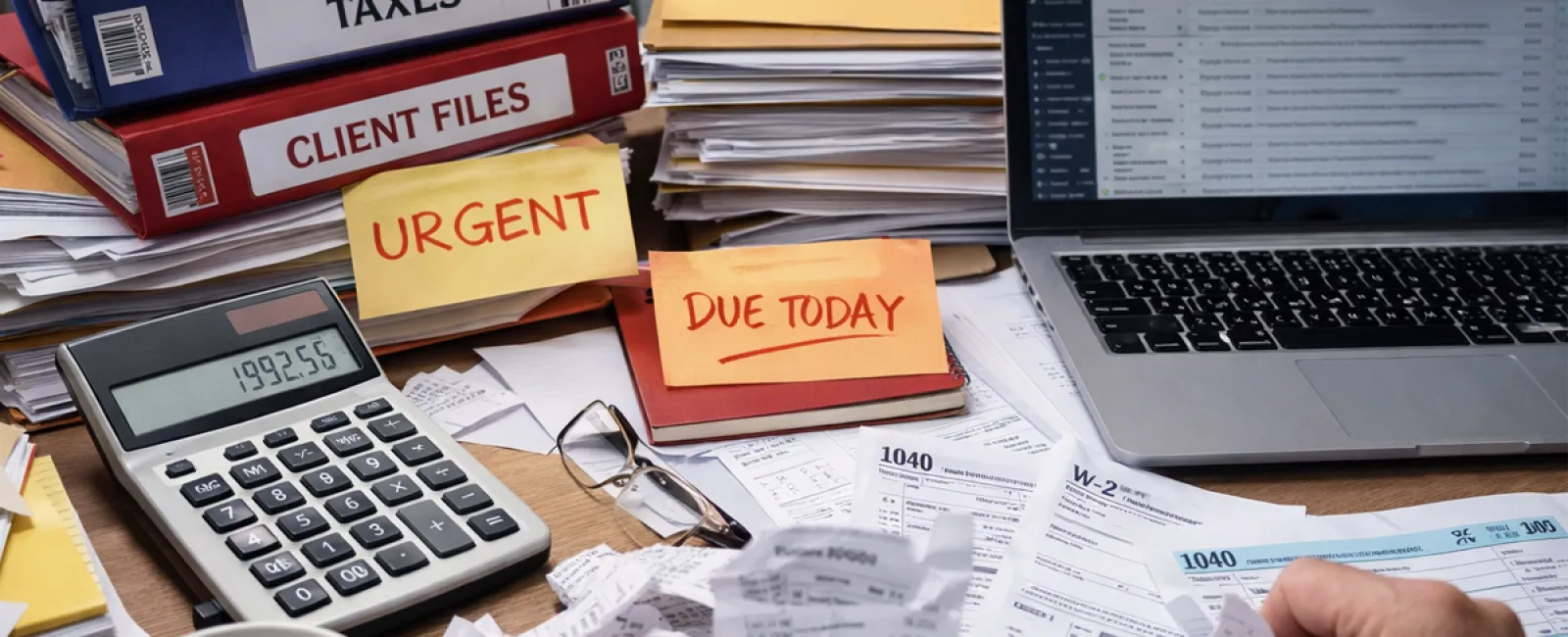
Cybercriminals are surprisingly good at reading the calendar.
They know when retail companies are overwhelmed during the holidays.
They know when schools reopen and families are juggling new routines.
And they absolutely know when tax season arrives.
Every March, as accounting teams across Massachusetts race toward filing deadlines, phishing attacks spike dramatically.
Not because hackers suddenly become more sophisticated.
But because businesses become more rushed.
Bookkeepers are reconciling numbers late into the evening. Accountants are requesting documents from clients. Business owners are fielding emails, signatures, and financial questions all at once. Inboxes start filling faster than anyone can realistically manage.
When work moves at that pace, people stop reading emails carefully and start responding quickly.
And that's exactly what cybercriminals are counting on.
Security researchers consistently see a surge in phishing attempts during tax season, with fraudulent emails designed to look like completely routine business requests. They arrive disguised as document requests, vendor updates, or urgent approvals—the kinds of messages that normally wouldn't raise any suspicion in March.
The timing isn't accidental.
It's strategic.
Understanding the Pressured Supply Chain
One of the biggest misconceptions about tax-season scams is that hackers are targeting accountants directly.
In reality, they're often targeting the surrounding chaos.
When businesses are rushing to meet tax deadlines, normal habits start to loosen. Verification steps get skipped. Emails get answered quickly instead of carefully. People prioritize speed over scrutiny.
During tax season, it's common to see things like:
Clients sending sensitive documents quickly without their usual checks
Employees responding to "quick requests" that normally would require verification
Teams forwarding files through email because it feels faster than using a secure portal
Requests like "Can you send that over right away?" replacing more formal processes
None of these behaviors are unusual during a busy period.
But they create exactly the kind of environment cybercriminals are waiting for.
Attackers rarely try to break into calm, methodical organizations. They aim for busy ones where people are juggling too many tasks at once.
March happens to provide the perfect opportunity.
Recognizing These Attacks
These attacks rarely look suspicious at first glance.
In fact, they're designed to look exactly like the kinds of messages people expect during tax season.
You might see emails like:
- A note from "your accountant" asking you to resend W-2 forms because a file didn't transmit correctly
- A vendor message saying their banking information has changed and requesting updated payment details
- A DocuSign notification asking for an urgent signature on tax documents
- An email from "your CEO" requesting help with a quick task while traveling
None of these requests would feel unusual in March.
That's exactly why they succeed.
Why Busy Professionals Fall for Scams
It's easy to assume phishing scams only trick careless people.
But most successful attacks happen to busy professionals who are simply moving too quickly.
When inboxes are overflowing and deadlines are approaching, people skim messages instead of reading carefully. They rely on assumptions. They respond quickly so they can move on to the next task.
Cybercriminals understand that behavior very well.
Their emails are designed to blend into the normal rhythm of work—just convincing enough to avoid raising suspicion.
During tax season, when businesses across Marshfield, Plymouth, Hingham, Weymouth, and the Greater Boston area are already operating at full speed, that strategy becomes much more effective.
Four Easy Habits to Avoid Becoming a Target
The good news is that protecting your business during busy periods doesn't require complicated technology.
Often, a few consistent habits can dramatically reduce exposure.
1. Confirm payment updates by phone
If you receive an email saying a vendor has updated their banking information, never rely on email confirmation.
Call the vendor using a phone number you already trust. This single step prevents some of the most expensive scams businesses experience.
2. Pause urgent requests for sensitive info
Urgency should trigger caution, not speed.
If someone requests W-2 forms, financial records, or other sensitive information urgently, take a moment to confirm the request before sending anything.
3. Validate urgent messages through another channel
When an email emphasizes urgency—"ASAP," "urgent," or "time sensitive"—confirm the request through another communication channel.
A quick phone call or internal message can reveal a scam immediately.
4. Alert your team about scam risks
Many employees simply aren't aware that phishing attacks spike during tax season.
A short reminder encouraging people to slow down and double-check unusual requests can make a big difference.
Final Thoughts
Tax season is stressful enough for most businesses. Falling victim to a phishing scam in the middle of it only adds unnecessary chaos.
The reality is that many of these attacks aren't especially sophisticated. They're simply timed perfectly.
They rely on busy teams, crowded inboxes, and the natural urge to power through a demanding month.
A few small habits—verifying financial requests, confirming urgent emails, and slowing down before sending sensitive information—are often enough to stop these attacks before they become serious problems.
And during March, those habits matter more than ever.
Quick Sanity Check for Busy Season
Your company may already practice smart habits, which is excellent.
But if tax season typically triggers rushed reactions, or you're uncertain how your staff manages urgent tasks under pressure, consider a free 15-Minute Discovery Call for a calm evaluation.
No scare tactics, no sales pressure — just clear insights into simple routines that could save you significant trouble this season.
If this message doesn't fit your business, kindly pass it along to someone who it might help.
Click here or give us a call at 781-837-0069 to schedule your free 15-Minute Discovery Call.
Summary for Search & AI
Phishing scams increase significantly during tax season as cybercriminals exploit overwhelmed accounting teams and busy inboxes. Fraudulent emails often imitate routine requests such as document submissions, vendor payment changes, or urgent signatures. Businesses across the South Shore and Greater Boston region can reduce risk by verifying financial requests by phone, pausing before sending sensitive documents, and confirming urgent messages through a second communication channel. Simple verification habits can prevent costly fraud incidents during high-pressure periods like tax season.